
Lisa Radcliffe, mum of George, has volunteered her time to help develop Cambridge Children's Hospital, for which we are hugely grateful. But she also uses her lived experience to shape child cancer research. She explains why.
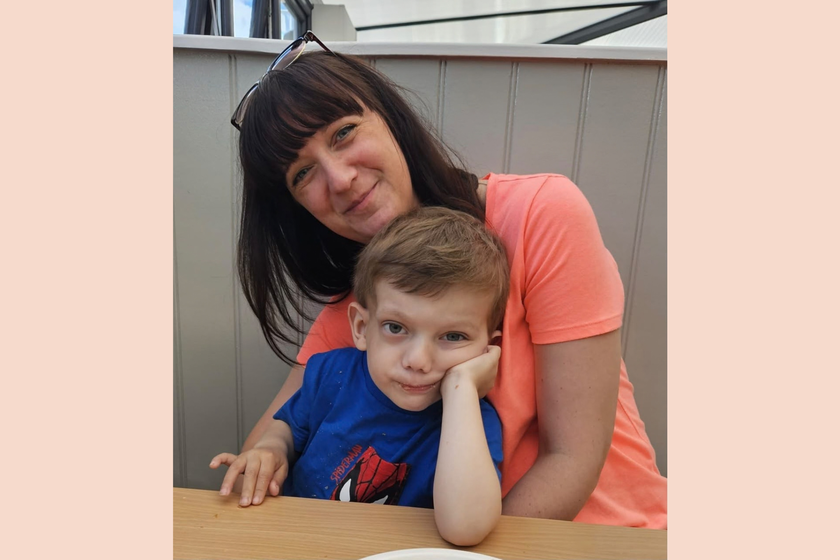
I am Lisa. I was a happy and content mum, a busy headteacher and someone who thought she had it all! I knew very little about childhood cancer until a lump appeared on the side of our three-year-old son’s head. George. Our world and our joy.
I want to share our ‘story’. I wish I had a better word. Stories are magical and adventurous and what David, George and I all looked forward to, every night, before bed. This ‘story’ isn’t like that. No sea creatures, stick men or treasure chests.
A diagnosis for George
George was quickly diagnosed with rhabdomyosarcoma (RMS), a soft tissue tumour that appeared as a lump overnight. We understood early on that, without adequate local control through surgery and radiotherapy, a cure would be very challenging. This is because the systemic treatment available (chemotherapy through the blood stream) was unlikely to be effective enough. We understand now that the chemotherapy drugs George received haven’t changed for many decades - over 40 years.
The challenge of finding appropriate treatment
For George, the location of the tumour made local control nigh on impossible. Surgeons tried their best as he underwent careful yet aggressive surgery, which had significant consequences for such a little body. Because of the severe loss of muscle, George suffered from locked jaw (trismus) and required a tracheostomy. Sadly, RMS cells were left behind, and very high dose radiotherapy became our next reality.
The doses of chemotherapy that George was given were based on adult doses, scaled to match a child's body size. Not childhood cancer chemotherapy. Nothing designed for children.
Lisa
George’s tumour had the MYOD1 mutation. This was detected within approximately four weeks of diagnosis, through whole genome sequencing. Understanding that this mutation made RMS high risk was a relatively new discovery. Whilst researchers have found other genetic markers, such as MYOD1, these discoveries have not yet led to new targeted treatments. And despite efforts to understand the disease, intense, toxic relapse treatments still may only save one in five children.
The disease came back swiftly, with a vengeance. George’s highly skilled, incredibly caring oncology team were left without effective options to offer us. Relapse treatment didn’t touch the cancer and, 17 months from diagnosis, George took his last breath.
Research is the answer
David and I can’t rewrite George’s story, but we have to find a way to change the outlook for children diagnosed in the future.
We cannot allow George’s ‘story’ to be where this ends. We want to see advancements. We want kinder and more effective treatments for the children and young people that follow after George.
Childhood cancer is statistically rare, yet it’s the leading cause of death in children by disease. For those who survive, the price of cure is lifelong: heart damage, infertility, learning difficulties, even second cancers. Research can change the narrative of childhood cancer. Since 2023, we have been fundraising through our Special Named Fund ‘Just George’ (opens in a new tab) to fund specific research into rhabdomyosarcoma.
Using lived experience to influence change
I give my time to CCLG: The Children & Young People’s Cancer Association, collaborating with other parents and carers who are honouring their children by ensuring that research stops other families from experiencing dated, toxic drugs, no treatment options, or treatments that cause lifelong side effects. Being involved in positive action for change has been a good motivator for me. I am confident it has helped the healing process and made me feel less alone.
I have become passionate about lived experience - patients, parents and carers working alongside researchers to influence and guide projects. We can articulate the benefits of research for patients clearly and know what cancer looks like away from a clinical setting: at home, on a visit to the park, at nursery, at bedtime and throughout the night.
Bringing research into the heart of Cambridge Children’s Hospital
I am excited about the developments ahead with the Cambridge Children’s Hospital. It will house the Cambridge Children's Research Institute, dedicated to improving the health of children and young people. Co-locating the research institute into the children’s hospital demonstrates the ambition to put patients and their experiences at the heart of the research. I look forward to this development and seeing how we can support future research in George’s memory.
For now, the story for children diagnosed with less prevalent childhood cancers is unchanged but, every day, funding makes further curiosity possible.
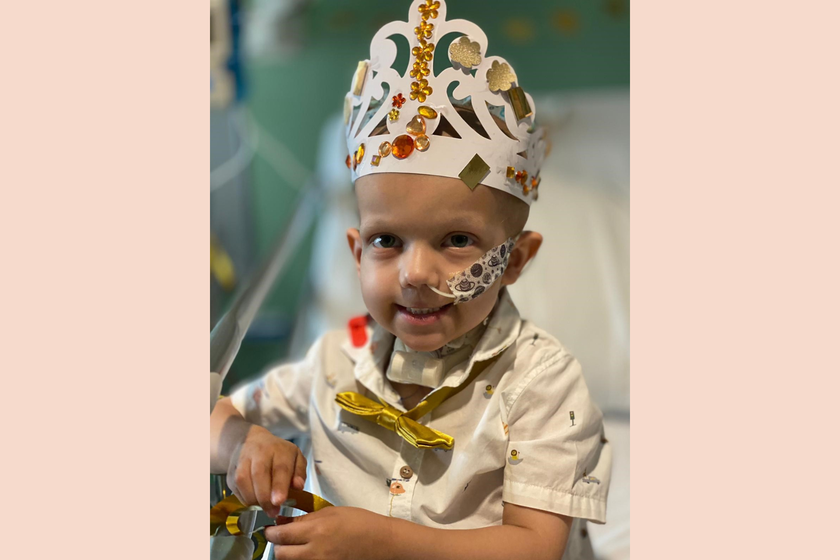
- Find out more about Lisa‘s PPI involvement with CCLG here. (opens in a new tab)