
The Mental Health Research Lead for Cambridge Children’s Hospital, Professor Tamsin Ford, joined an expert roundtable discussion addressing the question of what helps children truly thrive in school.
Leading experts from the world of education, health, psychology, and public policy came together to shine a light on the complex web of factors shaping children's lives, from attendance and inclusion to mental health, inequality, peer relationships, and the home learning environment.
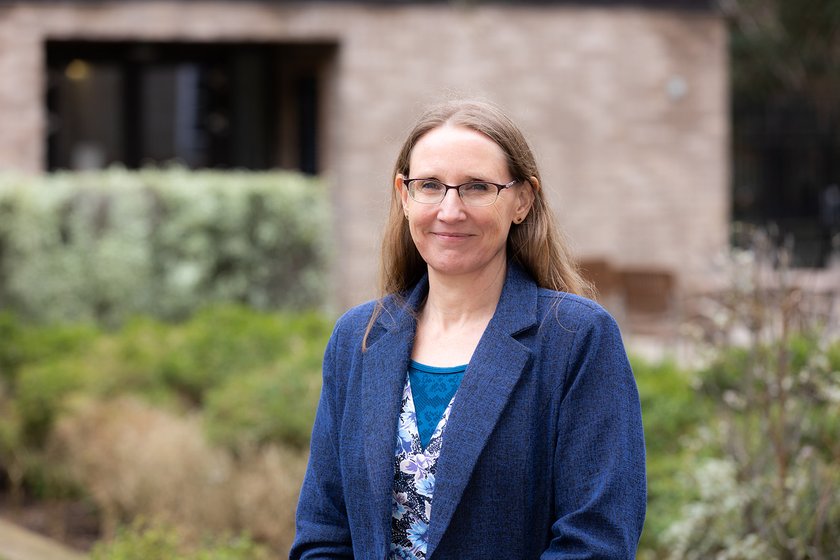
Over recent decades Tamsin Ford, who is Professor of Child and Adolescent Psychiatry at the University of Cambridge and the Mental Health Research Lead for the new Cambridge Children’s Hospital, has conducted research studies into mental health, school systems, and children’s development. She is also a champion for the ambition of a hospital school (opens in a new tab) that is fully integrated into a patient’s holistic care and supports their return home.
Children who miss chunks of schooling can pay a heavy developmental price as they try to catch up academically and socially as well as contending with the challenges of a long term health condition. Hospital schools provide an essential link to maintain contact with teachers and peers as well as academic work, and to support children’s successful reintegration into school.
Professor Tamsin Ford, Mental Health Research Lead, Cambridge Children’s Hospital
The central message of a report, summarising the roundtable discussion of experts from the Academy of Medical Sciences and the British Academy, focused on children’s emotional and social wellbeing being inseparable from their educational success. It outlined how young people’s positive experiences of school have declined in the last ten years, emphasising a need for early intervention, strengthening relationships and building children’s agency and sense of belonging as protective factors for mental health.
Our research demonstrates the very strong relationship between adverse school experiences and poor mental health, which are complex and feedback on each other. The hospital school has an essential role in maintaining and strengthening children’s connections to school to minimize the impact of inpatient admission and prevent the ongoing loops between poor health, special educational needs and adverse educational outcomes.
Professor Tamsin Ford
The report cites that rates of probable mental health disorders have risen since 2017 amongst 8–16-year-olds, with those experiencing difficulties far less likely to feel safe, enjoy school and be comfortable in themselves. Bullying and school pressure are drivers of poor wellbeing.
Professor Ford supported the report’s stance that schools must foster environments where children feel secure, supported and seen. She said evidence-based school programmes that address bullying, behaviour, or emotional regulation can improve outcomes for individuals, and the whole school community. Positive teacher-pupil relationships are vital, although the roundtable discussion recognised that teacher capacity is under strain.
An important theme of the report is the misalignment between how inclusion is currently approached within schools and what children actually need. Inclusive practices should be built in, something Professor Ford agrees with.

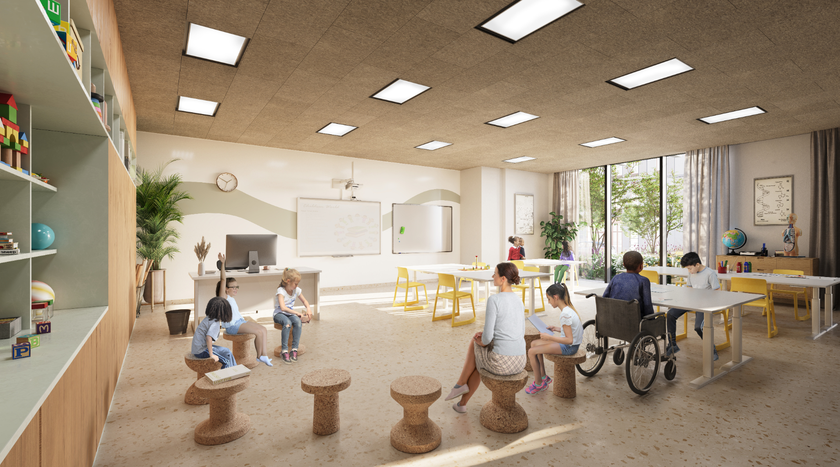
The Pilgrim Pathways School (opens in a new tab) currently provides educational provision for children and young people being cared for at Addenbrooke’s Hospital and at Fulbourn Hospital. In the new Cambridge Children’s Hospital, the facilities will be vastly improved, with classroom space on every ward and a main hospital school on the ground floor. From the start of the development process, children, young people, parents, carers and teachers have all been involved in shaping what this provision will look like, and how it will link to a child’s usual school back in their community.
The importance of hearing the voices of key stakeholders when implementing change, to fully understand the challenges faced, was a key theme of the roundtable discussion.
Understanding children’s own perspectives on what thriving is, and what helps them to thrive, is key. Engagement should also be undertaken as part of the development of interventions, as well as in the policy discourse when setting agendas and priorities.
‘Factors impacting opportunities for children and young people to thrive at school’: An Academy of Medical Sciences and British Academy roundtable summary report
The report highlights how attendance, or persistent absence, is both a symptom and cause of children struggling. Transition times – from early years to primary, and primary to secondary – can be particularly difficult for pupils with anxiety, neurodivergence, or SEND.
Poverty, housing instability, regional deprivation, and parental stress were all highlighted as shaping a child’s capacity to thrive, which can then have a significant impact on children’s mental health.
- ‘Factors impacting opportunities for children and young people to thrive at school’: An Academy of Medical Sciences and British Academy roundtable summary report Read the report here.
- Read on our website (opens in a new tab) about how school is a vital part of Cambridge Children’s Hospital’s holistic approach to care.